Started with another poets line

Writing with friends last night we began by tearing out a piece from Poem In Your Pocket: 200 Poems To Read And Carry, which was published in conjuction with The Academy of American Poets. When we do this we release a page from the book and select, take, steal, borrow a line from whatever we’ve torn out. My blind tear is Six Apologies, Lord by Olena Kalytiak Davis. The first three lines belong to her, after that it came from my mind, to my hand, to the page; and so it goes:

I Have Loved My Horrible Self, Lord.

I Rose, Lord, And I Rose, Lord And I

Dropt.

And Dropt what popped a balloon of

me on a needle of some weak judgment

Lord and I adopt a Southern accent each time

I say that word, give that title to any

you know who who passes by, Lord

my Lord, and I dropt that title onto

some invisible thing when I lay myself down

so close to a hurried death

but didn’t know the word and Lord you

were just a general, “Hey, you!” That exclamation point

etched deep, speaking loud in my soul

My Lord I rose into language and

loved and hated my horrible self

my extreme extra-ordinary, familiar

stranger, self who was dropt on me in

my close but no cigar life

ending time, dropt on me as a

kid, this self–my self–and dropt

on me as I dropt and popped out

became a round-headed baby, my Lord

I rose and always questioned that

Gertrude Stein a rose is a rose is a rose

is, where’s the daisy lady? I have loved

and hated my horrible self

Lord in hell and climbing to heaven

on a stack of lawn chairs, emotions

are their frames and they fold fast

and cheap, or hang onto some last

string of, what in your Lordy mind kind

of plastic is that? My Lord my self

I am my own Lord of the land of my

body, my mind, my itty bitty well

cleaned brain

and as it was sucked clean–dusted directly I rose,

Lord, and I dropt into your house.
Span

438

Earlier I wrote that
“Sometimes need to see the
span…” and realized that the
I was left out and
the sentence was incomplete
Neglected
would it b(neglected)
a span of
Beauty
span alone
some spread between abutments
span of glory
or defined as
distance of, between,
thumb, my
thumb to my little
finger
a spread hand to
hand on the wheel
of my car
I drove up the
narrow pass around
hairpin turns
span from hair to hair
route to root, follicle
or family
and saw a sign
that said Don’t Drive
Impaired with a
picture of a martini and a key
martini defined by the span of a
triangular circle of a glass
Impaired with sorrow
I drove through
no key to sorrow day
to day
through span of
mood to mood
from ok to not quite
right
span of mood to
depth and breadth
and height that
Elizabeth Barrett BrowniXX ng
(doodle if you screw up any spelling)
that she grandly
stated about her
soul reaching
while mine grasps
something anything anywhere
during easy and hard times
span, distinct definition, the
spread between my limits with the
wintery bulk of sorrow
in the delaying impairment,
death, hairpin, family follicle
root I pace the route
to move neglect
away from alone.

National Library, Chile

image

What I may see, and more and more, people, places, objects, ideas, scars, beauty, healing and growth. Changes surround. Weaving, crowd, art fills air, sun, saint, warp, poet places moves, police palm their chests, weft, woman hefts flowers, water under rush, lapis Iazuli, blue is bright. In this fabric, a core identity of strength, I sit right down and write; myself. I search.

Diagnostic Efforts

You know I keep trying to analyze, diagnose my Dad’s behavior in his last years: he became unsure of himself and his abilities; he lost the security of my mom being able to do everything to take care of them both as a couple, and as individuals, as her health was stricken; he was retired and wondered about his purpose; he got very thin and lost more weight no matter what he ate; I said, over and over, that he had combative demetia; wrong or right, he was angry and wanted to be cared for, became a suburban Grendel, full of fury but bare bone vulnerable; everyone cared, when allowed; he was full of fear; despair was a vicious bear on his back; he was ill; cancer crushes; his pain was immense; he was dying before officially diagnosed. Before, before he lost his voice I called, he asked me if I was mad at him. No, no I am not, I said, and added, I love you Dad. I love you too, he said. Then he wanted the newspaper, to see who was playing who that day. Confused, but stubborn, mad but forced to surrender to the play of disease; he reconciled to love.

My layman’s diagnosis; no sense resides in the world as we lose people we love. Wishing it was simple loss, such as where are my keys, what did I do with my notebook, is my other shoe over there; no, it dropped. To cobble another shoe, I attempt with thoughts. I try and try to figure everything out–to re-assemble myself, using my brain, my frontal lobe, while it communicates with every other batch of fiery electric nerves–and wonder, in resting moments, as I tell myself to breathe deeply, at my attempt to handle sorrow.

Dead End Job

405A customer of my employer, the restaurant, recently asked a friend of mine, a colleague, if he was happy at his “dead end job.” She tossed a knife at that chef, that baker, that artist; verbal carving, a utility for slicing, paring, she chucked her thoughtless cleaver; which he told me had hacked his heart. Yes, she’s a fool, yes, she’s unhappy with her own bum, dead end, and wants to make sure all are with her.
A Dead End, it has, this life; every life will arrive at that locale, station, hard stop, but that cannot be the meaning of the short word, life. It’s a brief time. Wonder
what
the
purpose
may be. On the radio a show is sponsored by a foundation that states it believes that all should have the chance of a productive life. To produce what, I ask, always. Luckily the radio does not answer. I’ve been close to the big dead end, the unexpected stop, and since then questions are the riser of my stage. The answer comes with memories, a
story or,
make up a number,
a zillion stories.
Come on, here’s the job, life. See. Here and now.
Rode
a tricycle, tiny speedy towhead, caped, a towel clothespinned around my neck, rode around the driveway super fast, to save everything, like the hero from the cartoon, Underdog; and I was, still may be. I loved that.
Do what you love, I was told. Thanks Mom. Thanks Dad.
Questioned
why are some deemed better than others. I grew, and the query grew, indeed, inside, engraved on my core, as I was
graded; my thoughts, my hills, steep or simple with some slight lean, I climbed.
Loved reading; Do What You Love.
Ivanhoe, Charlotte’s Web, The Princess and the Goblin–early–and poetry, plays–endless everything–later; read late at night, under the covers, they didn’t miss the flashlight. My light, the words
the pages, beautiful beacons.
Though through the air each day I heard; succeed, more, career, money, penny-saved, endeavor, poor, rich, middle; unending class and learned
Do what you love; on
stage, at
schools
Writing Home-ec Typing Math Acting English French Acting Spanish Latin History Acting Theology Philosophy Acting Theory Poetry Playwrighting Acting Writing, plunging in to class; unending class, working poor, working well, working
with many, on much.
Class culture; social status
what is the purpose?
Do what you love. Thanks Mom. Thanks Dad.
Got on the stage, the play; the life, the death and the story in between. No dead end allowed
on stage.
Made money in any job, discovered I could
Do what I love. Thanks Mom. Thanks Dad.
Dead end labor, takes me to
that guy stuck at his own dead end, Job, who with his problems trudged through and asked,
what the blankety blank it was all about, that unprintable curse question, what was the point of his life after he lost every actual thing? But his story is in another book, I digress.
Dead end job, life is a magnificent dead end job. There we go, and I went, eventually, was graded in every
stage.
Status, who knows; some care, may say it is
better to be, and it rises again, to be what or where?
We do get to the dead end, eventually,
scattered on some ground
buried boxed in still lying lands
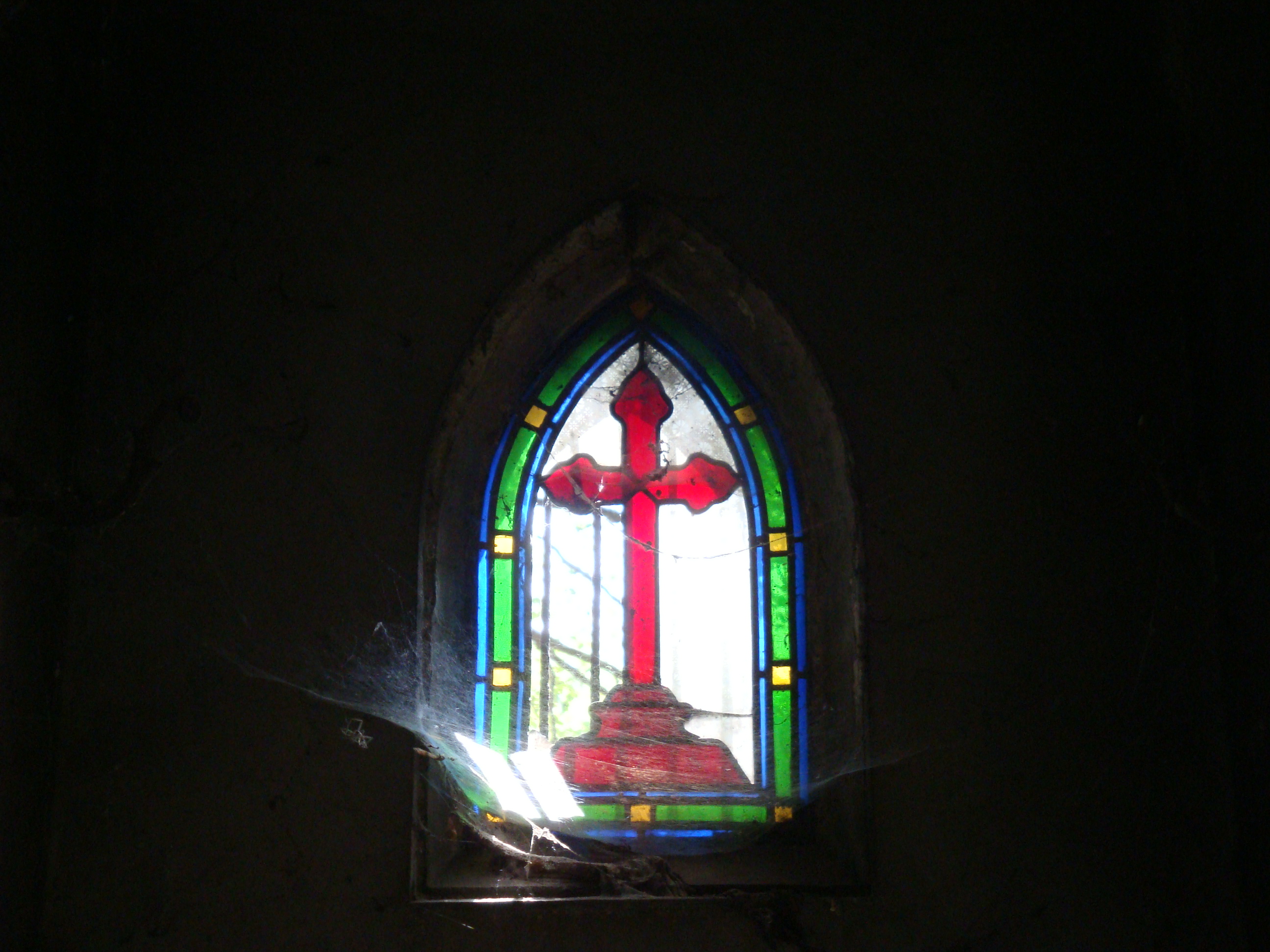
housed in a small tomb in Pere Lachaise Cemetery, where a spider web
dangles catching light before a bright red cross that the sun shines through.
Love what you do,
As you live, through each
stage be
you Job or be at job, digress and return, much better than the true egression.
Life, what a magnificent, dead end, job.

Confess(ional)

For many years I have been authoritatively informed that confessional poetry is something to be scoffed at. Yes, heard it from friends, internet opinionators, reviewers, strangers at a conference (not one aimed at writing/poetry), and more. Standing in line for some steamy breakfast at that conference I was reading a collection of Sylvia Plath’s work and the man in front of me, maybe bored during his wait, said “Plath, too bad she wasn’t a writer. Dumb (mumble mumble..).” I was shocked and stood silent for a long moment. Gathering up my backbone I said, “I would love to read the collection of your works!” Met with silence, I sighed and said, “Looks like they’ve got a great load of beans at that bar that we can load up on.” Then I got to pick up a plate and load my breakfast with eggs, potatoes, and my share of beans.

Confessional poetry; the naming of the particular style of the work has seemed odd to me, pretty much when I took different writing courses in my long ago undergraduate years. The meaning of the word confess that was embedded in my mind was connected to a church, Catholic or any other that requires some type of questioning and supervision, and it seemed to be an admittance of wrongdoings. To let in the fact that one had done wrong, and to push it out and hope for forgiveness in the repentance of the sins described, is the meaning that the word confess carries as it puts on the “ional” wear and sits as a noun or goes to work as an adjective; that is the place where it takes me. I know, I know the name was applied to writers who pushed through social, academic, and artistic boundaries and that is what I wanted to do as I learned as much as I could about writing. Break down any walls that I saw around me or had built; a solo construction worker, I was. Those ramparts are the hardest to plow through. Accept the name, I do, and placing it in both the meaning of admitting of wrongdoing, to the confessing any doing I wonder; what will I admit?

I love candy, at some moments of the month, I confess; I wear socks with holes in them, I confess; I think many people are not bright, I confess; I change the word bright–along with the not–to naming them stupid, I confess; I curse often at people driving the speed limit in front of me when there are cars all around and I am blocked in, I confess; Sometimes I drive the speed limit and laugh snarkily at someone whose face, small in my rear-view mirror bares their frustration, I confess; I love the sticky sweetness, the processed questionable flavor of fast food when I am sad, I confess; I did not dress smartly, sharply, with an ounce of fashion at many points when I wandered through Paris for a month, I confess; I can speak about four or five words of French but love to don a French accent, and am good at accents, in order to sound uppity, I confess; I worry about living in a limited mind country that seems to wish for only one language, I confess; I love poetry, I confess; I do not understand some poems at all and wonder what in the heck they are talking about, I confess; I am a writer, I confess; neglect of writing is one of my everyday activities, I confess; the sock on my right foot is bunched about my toes, I confess; I have allergies and am full of snot, I confess; I think of a line of a poem from Sylvia Plath–daddy oh daddy with your big black boots–and am crushed in the thought, I confess; I love the words of writers who offer a wide world of thought to connect anything and everything with what they may say, I confess; I despise narrow, empty, unwilling to fill, minds, I confess; as I recovered the ability to live, speak, write, and think, after a severe brain injury, surgery and the lot, I was told that my recovery was a miracle, that I was blessed, I confess; when I hear some say that a god, any god, their god does not care for, ok let’s add the nasty word, hates, gay people I want to push my miracle, my personal blessing, in their scrunched thin faces, I confess; oh, I hit myself in the eye when pulling my bra-strap up, I confess; Right now I am using a press pot to make my coffee, I like the name French Press more as I press along today, I confess; At times I love myself, I confess.

Writer

I have not written too much because I doubt. Have doubted every word I fix onto the page, this page, any page–I wish I had a page to run in and notify me that all was well or disastrous, I digress–feel that my context, my syntax any X word, my existence or exist-tense, which is a hard place to be sentient in, has become defined as doubtful, demur, skeptic.

Fear looms large, and fabricates, twine after twine of an endless heavy thread rug over my head, chest, thighs, toes bent to point, and curled, facing dirt I lay my body low. Hard to breathe, unspeakable–to say I am a writer has been bundled in the roll of the rug and hard to hear. Whisper louder, is my direction. When at a fine reading, a writer, a poet, an anybody, is easy to see over there, and there, you and you, again. Those words, writer and poet are small but well packed, ultra-stacked choices of self for many other people who openly chortle, discuss, examine, and analyze, then nod–mouths alight, streaks of teeth, slip of tongue, height of crowns on high–to all on each side of the room. I watch my comments and push, I push into the wall soft and silent to not be seen, so hush little…Decay, I do, as I wait. Wait, for what?

I have written, yes, will reveal, yes, full of worry, maybe. Wait for peep, a hand, a word, create a page, mine, to wait and see what streaks toward me, and then: find faces, feel movements, start within the state where stories rest; that is my given assignment. Taking my new role in this play I write to unroll the weave of the well loomed doubt dressing, thread by thread, then I spin a stage to be, to stand, to speak, to write. Here, it is my stage. Curtain–up.